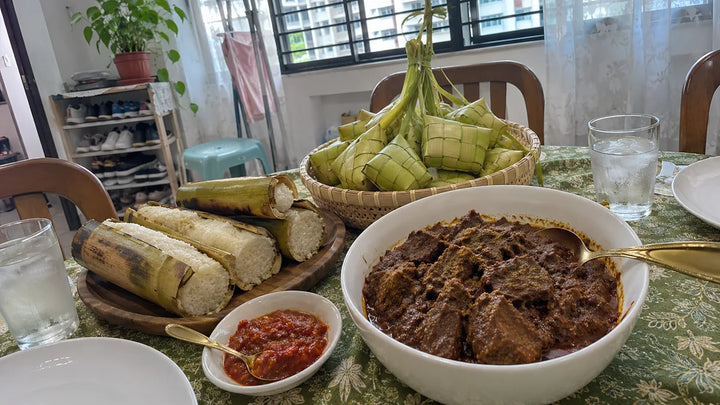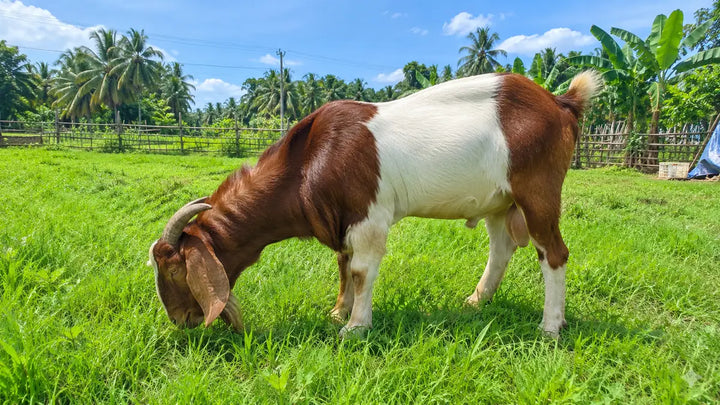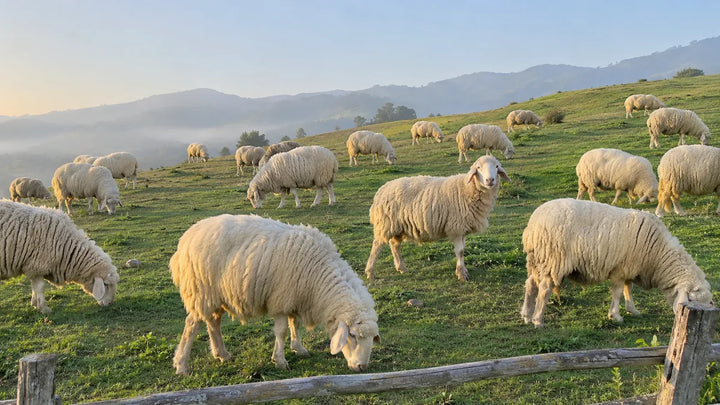

A cow share qurban means taking one of seven sacrificial shares in a cow. The Federal Territory Mufti Office cites the narration of the companions’ sacrifice at Hudaibiyah as evidence and explains, through Imam al-Nawawi, that each share represents one goat.1
On this page 9 sections
Key takeaways
- Households: Shareholders do not have to belong to the same family.2
- Mixed purposes: The cited authority permits separate qurban and aqiqah shares, but records disagreement between schools.1
- Nazar: Muslim.sg says the person performing an obligatory nazar sacrifice cannot eat its meat.3
- Deceased parents: The cited Shafi‘i position requires a request made before death.5
Cow share qurban is a sacrificial arrangement, not simply a group purchase of beef. Before booking, separate the questions of who the sacrifice is for, what each share is intended for and how the meat will be handled.
What is cow share qurban, and what is the hadith evidence?
A cow or camel can be shared in seven sacrificial parts, according to the Federal Territory Mufti Office’s explanation of the Hudaibiyah narration.1
The narration describes the companions sacrificing with the Prophet at Hudaibiyah, sharing a camel and a cow in seven parts. The office identifies its references as Muslim 1318, Abu Daud 2809 and al-Tirmizi 1502.1
The office also cites Imam al-Nawawi’s explanation that each part represents one goat. That is the basis for treating a cattle share as a sacrificial portion rather than merely a contribution towards an animal.1
The equivalence concerns what the share represents in the sacrifice. The supplied explanation does not promise identical meat weight or establish a ranking of spiritual reward between buying a share and sacrificing a whole goat. When viewing cow share options, keep those separate from the religious question of validity.
Must the shareholders belong to the same household?
The shareholders need not be from the same household. Jordan’s General Iftaa’ Department notes that the people in the cited narration were not all from one household.2
The department distinguishes sharing a cow or camel from a sheep sacrifice whose reward extends to its owner and the household that person supports. Household reward is not the same arrangement as several people holding separate sacrificial shares.2
| Arrangement | Explanation in the cited sources |
|---|---|
| Shared cow or camel | Seven people may share and attain the reward.2 |
| Sheep for an owner and supported household | The reward extends to the owner and that household.2 |
| Separate sacrificial shares in one sheep | Jordan’s General Iftaa’ Department says this is impermissible.2 |
The explicit no-sharing ruling supplied here concerns a sheep; it should not be expanded into a detailed ruling on every animal without further evidence.2
Can one cow contain both qurban and aqiqah shares?
The Federal Territory Mufti Office permits separate qurban and aqiqah portions in one cow, citing Shafi‘i and Hanafi scholars. Its answer also records disagreement.1
The question put to the office was specific: could an animal have five portions intended for qurban and two for aqiqah? Its response allows that arrangement across the animal’s portions.1
That is different from claiming that one portion automatically fulfils both purposes for the same person. The supplied question concerns allocating different shares to different acts of worship, so the permission should be kept within that scope.
The office reports that the well-known Maliki and Hanbali positions do not permit the combination and regard it as invalid. A family following those positions should not treat the permission as universal.1
For someone who can afford it, the Federal Territory Mufti Office recommends keeping the two acts separate to avoid the scholarly disagreement. That is its recommendation, not a statement that its permitted mixed-share arrangement is invalid.1
If you are considering aqiqah arrangements, ask whether the animal contains other purposes and discuss any school-specific concern with your own ustaz before choosing.
Who makes the niat for a share, and when?
In its mosque-sponsored-share case, the Federal Territory Mufti Office says each chosen participant should make the intention when handing over the animal or when it is slaughtered.4
The case involved a surau with three participants that sponsored four further portions to complete a cow. The instruction was directed to the people selected to receive those sponsored portions.4
This matters because paying for an animal and being the person performing the sacrifice are not necessarily the same role. The office’s wording places an intention with the selected participant, rather than treating the sponsor’s payment as the whole arrangement.4
For an overseas booking, ask who is recorded as the participant and how the representative handles the intention and slaughter on that person’s behalf. The supplied case does not settle every detail of online authorisation, advance intention or wording. Use the contact page to clarify the booking process, and take the religious detail to your ustaz where needed. If you are booking a share for someone else, see our guide to qurban on behalf of someone else.
Can a share be offered for a deceased parent?
The cited Shafi‘i position requires a request before death. The Federal Territory Mufti Office favours that view while acknowledging scholarly disagreement.5
Its answer says that most Shafi‘i scholars require the deceased to have asked for the sacrifice before passing away. A wish to honour a parent should therefore not be presented as automatically meeting that position.5
The same answer also records a permissive view under which a sacrifice may be performed for the deceased and its reward reaches them. The existence of that view does not erase the condition in the position the office favours.5 For a fuller look at what scholars say, see our guide to qurban for deceased parents.
Before choosing Qurban for Arwah, explain to your ustaz whether your parent made such a request. Ask which view applies to your circumstances rather than relying on a product name to resolve the ruling.

How old must the cow be, and when can it be slaughtered?
IslamQA’s age summary gives two years for cattle under the Hanafi, Shafi‘i and Hanbali positions, and three years under the Maliki position.6
The same answer says a cow younger than two years does not count as a sacrifice according to any of the imams it discusses. Ask for confirmation of the animal’s age; appearance alone does not establish the age stated in the source.6
For timing, Muslim.sg describes the ritual as taking place after sunrise on Aidiladha, 10 Zulhijjah, with the period ending at sunset on 13 Zulhijjah. These are the boundaries stated in the supplied Singapore explanation.3
A delivery date is not a slaughter date. When checking an overseas arrangement, ask about the actual sacrifice separately from processing and transport. The distinction helps you read a programme’s fulfilment information without mistaking later meat delivery for late slaughter.
How should the meat be handled, especially for nazar?
Nazar changes the consumption rule: Muslim.sg says meat from an obligatory nazar sacrifice must go entirely to the needy and cannot be eaten by the person performing it.3
For an ordinary sacrifice, the same article gives one distribution arrangement in which one-third goes to the person performing qurban and two-thirds to the needy. That is a stated arrangement, not evidence that every participant must receive a fixed package weight.3
The supplied sources do not describe a precise weighing method for dividing a shared cow. They also do not settle how a processor should separate a nazar portion from other portions in the same animal. Those operational details need clarification rather than an invented rule.
If your booking involves Nazar Qurban, explain the vow before paying and ask how the relevant meat will be identified and distributed.
If you are offered meat to take home, flag any nazar purpose before accepting it. The participant’s own consumption is exactly where Muslim.sg distinguishes obligatory nazar from an ordinary sacrifice.3
What do Singapore’s official announcements establish?
MUIS listed a cattle “1/7 part” option for the 2026 season. That historical announcement confirms the format locally, not a current price or future booking offer.7
The April release said the programme’s overseas cattle, lamb and sheep were slaughtered in Australia. Registration was scheduled to close on 22 May 2026, subject to livestock availability, and participants were to receive chilled, pre-packed meat within two weeks after Hari Raya Haji.7
These are programme-specific arrangements. They should not be applied to every overseas booking or read as a general religious requirement about where cattle must be slaughtered.
The release separately said local rituals would be conducted by licensed operators endorsed by MUIS, with mosques providing premises and facilities. That statement concerns local operations, not blanket endorsement of every business offering qurban online.7
After the local disruption, MCCY reported that MUIS would extend preparation lead time to six to eight months for regulatory approvals and operational planning.9 The supplied evidence supports that announced change, but not a claim that all future operational risks have been eliminated.
For your own booking, the useful questions are concrete: whose share is being recorded, what purpose it carries, when slaughter happens and who receives the meat. Resolve those points before selecting an arrangement, especially where a vow, mixed purposes or a deceased parent is involved.
Questions people also ask
Is qurban obligatory or sunnah?
Muslim.sg describes qurban as sunnah muakkadah, or highly recommended, for those capable of performing it. It also notes that, unlike the majority of scholars, the Hanafi mazhab regards it as wajib (obligatory).3
Should a shareholder avoid cutting hair and nails?
Muslim.sg encourages those performing qurban not to cut or trim their hair and nails from the beginning of Zulhijjah until their animal is sacrificed. The source presents this as encouragement, not an obligation.3
Can I help pay for someone else’s sheep without becoming a shareholder?
Jordan’s General Iftaa’ Department gives payment as a gift, rather than as a sacrificial share, as the alternative. Financial help and ownership of a separate qurban share are different arrangements.2
When did Zulhijjah 1447H begin in Singapore?
The Mufti of Singapore announced that Zulhijjah 1447H began on Monday, 18 May 2026. Treat that as a historical announcement, not a date for a future qurban season.8
Did the 2026 Singapore programme also offer nazar and aqiqah?
The MUIS release said livestock were also available for nazar and aqiqah. That general statement does not specify whether an individual cattle share could be booked for either purpose or combined with other purposes in the same animal.7
Book a cow share or a whole cow
Choose a cow share (1/7) for one name or a whole cow (7 shares) for up to seven names. Sacrificed on Eid al-Adha 2027 (17–19 May, subject to moon sighting).
- Cow share from S$150
- Up to 7 names
- Eid al-Adha 2027
Sources (9)
- Federal Territory Mufti Office, Malaysia, Sharing korban and aqiqah in the same cow or camel.Used in: 1. Shares and evidence · 3. Mixed intentionsAs of 10 Ogos 2016
- General Iftaa’ Department, Jordan, Sharing one sheep as an udhiyah is impermissible.Used in: 2. Households and sheepAs of 02-10-2014
- Muslim.sg (MUIS), The meaning, significance and rulings of korban.Used in: 6. Age and timing · 7. Meat and nazarAs of May 2026
- Federal Territory Mufti Office, Malaysia, The ruling of mosque-sponsored sacrifice.Used in: 4. Making the intentionAs of November 2016
- Federal Territory Mufti Office, Malaysia, The ruling of sacrifice for a deceased person.Used in: 5. A deceased parentAs of August 2016
- IslamQA.info, Minimum age of sacrificial cattle.Used in: 6. Age and timingAs of 09/October/2013
- MUIS, SalamSG Korban 2026 arrangements.Used in: 8. Singapore contextAs of April 2026
- MUIS, Singapore announcement for Zulhijjah 1447H/2026.Background reading for this guideAs of May 2026
- MCCY, Initiatives to strengthen local korban arrangements.Used in: 8. Singapore context