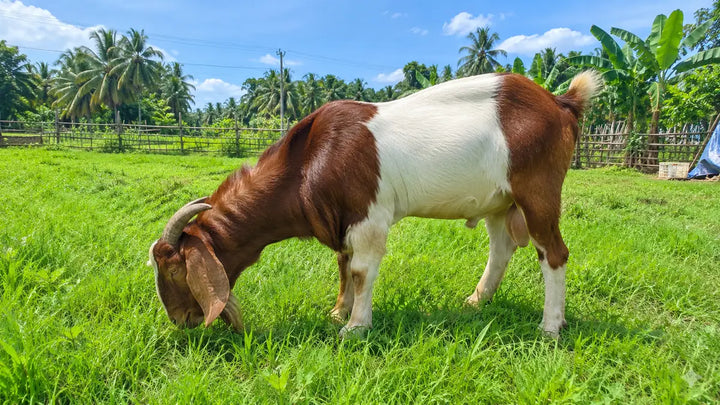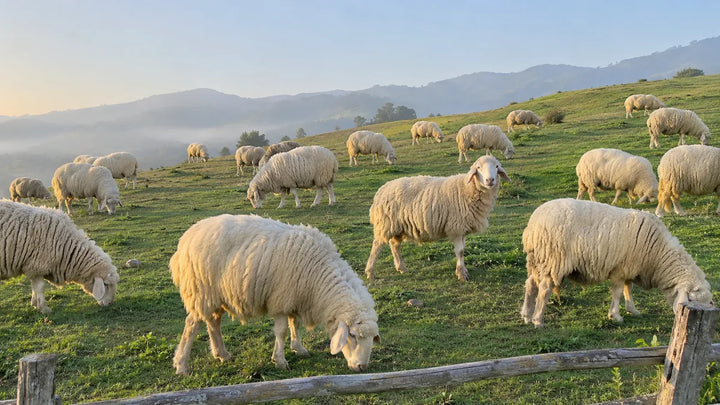

The cited guidance gives minimum completed ages of 1 year for sheep, 2 for goats and cattle, and 5 for camels. A Shafi‘i exception permits sheep that shed their teeth before a year. Age alone is insufficient: the animal must also meet condition requirements.
On this page 11 sections
Key takeaways
- Species: Fish and chicken cannot be used for qurban.
- Extra day: Mufti WP says the goat age condition does not require an additional day after completing 2 years.
- Minor defects: Missing horns or pierced ears do not automatically invalidate an animal under the cited view.
- Singapore checks: Import health clearance and religious suitability are separate questions to confirm.
The qurban animal age requirement depends on the species, not simply how large the animal looks. For Singapore families, the useful starting point is an age table, followed by the sheep exception and a separate check for disqualifying defects.245
What is the qurban animal age requirement?
The cited guidance gives completed ages of 1 year for sheep, 2 years for goats and cattle, and 5 years for camels, with a specific exception for younger sheep.25
Mufti WP’s age explanation concludes that an ordinary goat should be 2 years old, entering its third year, while a sheep should be a year old, entering its second. Jordan’s General Iftaa’ Department states the cattle and camel thresholds explicitly in completed years.25
| Animal | Minimum completed age | Qualification in the cited guidance |
|---|---|---|
| Sheep | 1 year | A Shafi‘i tooth-shedding exception can apply before this age |
| Goat | 2 years | Completed 2 years, entering the third |
| Cattle | 2 years | Completed 2 years, entering the third |
| Camel | 5 years | Completed 5 years, entering the sixth |
The sheep and goat entries come from Mufti WP’s concluding explanation; the cattle, camel and younger-sheep qualification come from Jordan Iftaa.25 These are attributed rulings, rather than a claim that every school expresses every threshold identically.
When looking through sheep and goat options, ask which species the proposed animal actually is. A combined product category is not a reason to apply the sheep threshold to a goat. Likewise, when considering cattle options, ask how the completed age will be confirmed.
A useful booking question is: “What species is allocated, and what information supports its age at slaughter?” That invites a specific answer rather than a general statement that the animal is mature.
Does a goat need to be 2 years and 1 day old?
An additional day is not required in Mufti WP’s answer: the texts set the goat age condition at 2 years without stipulating another day, so exactly 2 years or 2 years and a day both meet it.3
That helps interpret the phrase “entering the third year”. Mufti WP’s separate age article concludes that an ordinary goat should be 2 years old going into its third year, rather than requiring 3 completed years.2
The English age article contains awkward wording earlier in its discussion, including phrases about reaching the next year. Read those alongside its explicit conclusion, not as an independent instruction to add another completed year. For a particular animal with uncertain age information, ask your ustaz to assess the evidence rather than guessing from the wording alone.
Can a sheep younger than a year qualify?
Yes, under the cited Shafi‘i view: Jordan Iftaa says a sheep that becomes jadha‘ by shedding its teeth before a year can qualify.5
Jordan’s explanation explicitly identifies the Shafi‘i position and explains jadha‘ here through the shedding of teeth. Mufti WP’s discussion also mentions a sheep whose front teeth have fallen before it reaches a year.25
The exception concerns sheep. These sources do not give a matching permission to use an underage goat merely because it looks well developed. Nor should “large”, “heavy” or “well fed” be substituted for the tooth-shedding condition stated in the cited explanation.
If a booking refers to a younger sheep, ask whether the provider relies on this exception and what supports that assessment. Where the answer is unclear, take the details to your own ustaz before treating the animal as suitable.
When requesting advice, provide the proposed animal’s species, age information and tooth-shedding assessment together.
Which animals can be used for qurban?
Mufti WP lists camels, cattle, goats and sheep as permitted animals. Muslim.sg explicitly excludes fish and chicken.14
Species is therefore a separate eligibility question from age. An animal does not become a qurban animal merely because its meat is normally eaten, and choosing an eligible species does not remove the need to check maturity and condition.14
For a family choosing between categories, settle the animal type before comparing the service details. Ask whether a description such as “sheep/goat” identifies a choice you make or an allocation the provider makes. The answer matters because the cited minimum ages differ.2
The cited guidance explicitly states the cattle threshold, but does not separately address buffalo. If buffalo is the proposed animal, request a specific religious reference rather than assuming this table has settled that question.
Which defects make a qurban animal invalid?
The hadith cited by Mufti WP identifies evident eye blindness, obvious illness, obvious lameness and severe emaciation as disqualifying conditions.4
Mufti WP attributes the report to Abu Daud and describes the emaciated animal as having no marrow. Its explanation also states that blindness in even an eye makes the animal unsuitable for korban.4
The same page distinguishes these conditions from lesser defects. That distinction matters: a checklist should preserve words such as “obvious” and “severe”, rather than turning every imperfection into the same ruling.
| Condition | Treatment in the cited Mufti WP explanation |
|---|---|
| Blindness in an eye | Invalid for korban |
| Obvious illness | Listed among the disqualifying defects |
| Obvious lameness | Listed among the disqualifying defects |
| Severe emaciation, with no marrow | Listed among the disqualifying defects |
| Thinness that is not severe | Distinguished from disqualifying emaciation |
| Lameness that is not evident | Distinguished from obvious lameness |
These distinctions come from Mufti WP’s discussion of animal defects.4 They are not a remote diagnosis of an animal shown in a booking photograph. If you receive information about illness, walking difficulty or poor condition, ask for an assessment of that particular animal rather than deciding from a general label.
Are missing horns or pierced ears acceptable?
Missing horns, torn ears and pierced ears do not affect validity according to the most correct opinion reported by Mufti WP.4
Keep the description precise when seeking advice. “Pierced ear”, “torn ear” and “part of the ear removed” are not interchangeable descriptions. Mufti WP’s explanation addresses torn and pierced ears, but does not give enough detail to settle every case involving missing ear tissue.
The same caution applies to pregnancy: the cited guidance allows female animals, but does not give a separate ruling about pregnant animals.4 Give your ustaz the actual condition in question rather than asking about a broader category that may hide the relevant detail.

Can the meat be eaten if the animal did not qualify?
Mufti WP says the defective animal discussed in its ruling does not count as korban, but its meat can still be eaten and shared as ordinary slaughtered meat.4
That answer separates ritual validity from the treatment of the meat. Eating or sharing the meat does not retrospectively make the animal a valid qurban animal. Conversely, the religious defect discussed on that page does not itself mean the meat must be discarded.4
Do not use this answer to decide whether meat from a sick animal is safe. SFA’s separate import process requires documents to be in order and animals to be healthy before release to approved premises.7
Do the same conditions apply to aqiqah animals?
Yes, in the cited explanation: Mufti WP quotes Sheikh Muhammad al-Zuhaily as stating that aqiqah animals have the same conditions as qurban animals.2
Mufti WP’s conclusion discusses goats for aqiqah or sacrifice together, so the occasion does not create a lower goat-age threshold in that guidance. The article separately gives the sheep age and discusses the tooth-shedding exception.2
If you are arranging an aqiqah service, specify the intended species when asking about suitability. That keeps the discussion focused on the relevant age rule rather than on the service name alone. To ask whether one animal can count for both, see our guide to aqiqah and qurban with the same animal.
How many people can share a sheep, cow or camel?
Jordan Iftaa says a cow or camel may be shared by 7 people, but sharing a sheep as separate udhiyyah participants is impermissible.6 For how seven people share one cow, see our guide to cow share qurban.
Its explanation distinguishes sharing an animal from sharing in its reward. For a sheep, the reward extends to its owner and the household the owner supports; that is not the same as dividing the sheep into separately purchased ritual shares.6
When considering a cow-share option, ask what the allocation represents. The cited ruling supports the cattle and camel sharing arrangement, while its household explanation specifically concerns sheep. The cited ruling does not separately address goats.
What checks apply to korban animals in Singapore?
SFA requires a Special Slaughter Permit for every consignment of sheep or goats imported into Singapore for religious slaughter such as korban.7
SFA says livestock may be released and taken directly to approved holding and slaughter premises when the documents are in order and the animals are healthy.7 Those are import and health requirements, not a replacement for checking the religious age and defect conditions.
For the local component of the SalamSG Korban 2026 programme, MUIS’s April announcement states that rituals would be conducted entirely by MUIS-endorsed licensed korban operators, with mosques providing premises and facilities.8
Before committing, separate your questions: which animal and age basis applies, who assesses its condition, and where slaughter takes place. Use the contact page for service-specific clarification; take unresolved religious questions to your own ustaz.
Questions people also ask
Is qurban obligatory or recommended?
Muslim.sg describes korban as sunnah muakkadah, highly recommended for those able to perform it. It distinguishes the Hanafi position, which regards it as obligatory.1
What changes if I have made a nazar to perform qurban?
Muslim.sg says all schools agree that qurban becomes obligatory once a person has made a nazar (vow) to perform it. For obligatory nazar korban, all the meat must go to the needy; the person performing it cannot eat any.1
Can a female or castrated animal be used?
Mufti WP includes male, female and castrated animals among the permitted livestock. That does not remove the separate age and condition requirements.4
Does a feral goat automatically become unsuitable?
Mufti WP leans towards allowing feral goats because they remain goats, despite becoming wild through not being farmed. Its answer does not remove the age requirement.3
What do korban and udhiyyah mean, and when is the ritual performed?
Muslim.sg describes korban as the local term for the ritual sacrifice and calls udhiyyah the more accurate term. It gives the period as after sunrise on 10 Zulhijjah until sunset on 13 Zulhijjah.1
Book your Eid Qurban 2027
Pay now and your qurban is performed on Eid, with a certificate and a WhatsApp update.
- Certificate
- WhatsApp update
- Photo in selected countries
Sources (8)
- Muslim.sg (MUIS), The meaning, significance and rulings of korban.Used in: 4. Permitted livestockAs of May 2026
- Federal Territory Mufti Office, Malaysia, Al-Kafi 1357: Age of goats for aqiqah.Used in: 1. Minimum ages · 2. Completed years · 3. Sheep exceptionAs of August 2019
- Federal Territory Mufti Office, Malaysia, Al-Kafi 109: Feral goats for korban.Used in: 2. Completed yearsAs of September 2015
- Federal Territory Mufti Office, Malaysia, Validity of a blind animal for korban.Used in: 4. Permitted livestock · 5. Disqualifying defects · 6. Minor imperfections
- General Iftaa’ Department, Jordan, Conditions of udhiyyah.Used in: 1. Minimum ages · 3. Sheep exceptionAs of 29-03-2026
- General Iftaa’ Department, Jordan, Sharing one sheep as an udhiyah.Used in: 9. Sharing an animalAs of 02-10-2014
- Singapore Food Agency, Import requirements for live poultry, livestock and live animals.Used in: 7. Meat and validity · 10. Singapore checksAs of October 2026
- MUIS, SalamSG Korban 2026: Overseas initiative and local options.Used in: 10. Singapore checksAs of April 2026